Northern Virginia · TS/SCI with CI polygraph · Advise or Build

Independent AI/ML guidance for Intelligence Community program offices.

Manifold is a small Virginia-based AI/ML firm founded by senior technical leaders with firsthand experience supporting the Intelligence Community. Our backgrounds span trusted-agent and SETA roles, from prototyping and technical requirements to source selections and strategic investment decisions. We help government organizations determine what to buy, what to build, and how to deploy AI/ML capabilities in secure environments. We provide independent advisory services or hands-on development, maintaining a strict separation between the two for each customer.

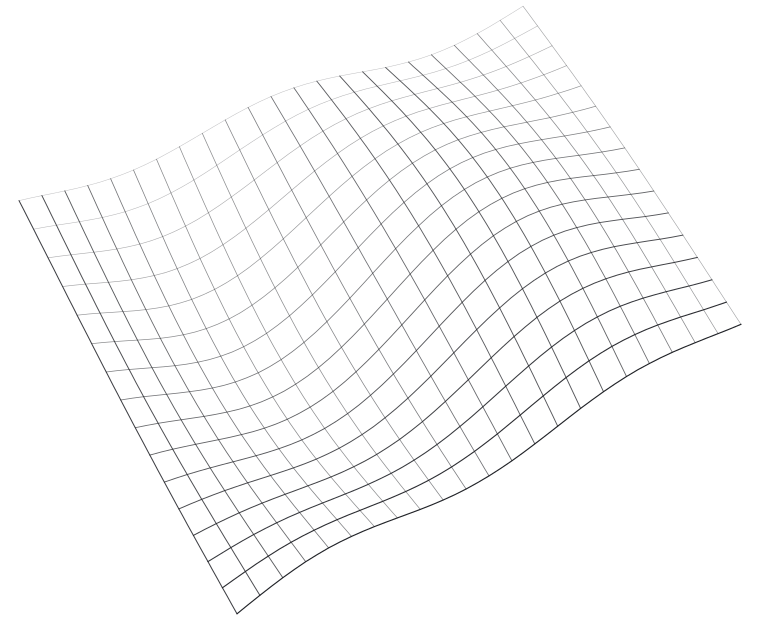
Line drawing of a curved two-dimensional surface drawn as a wire grid.
Why the name Manifold? A manifold is a mathematical term for a smooth surface of any dimension, and the idea is central to Artificial Intelligence.
Location
Loudoun County, Virginia
Delivery
Senior practitioners, cradle to grave
Clearances
TS/SCI with CI polygraph, everyone at the firm
Reach us
info@manifold-llc.com

01  Capabilities

What we do

Five ways we support your mission. Every engagement begins with clear expectations and ends with actionable deliverables you own. We keep advisory and implementation work separate to preserve objectivity.

01

Strategy and roadmaps

We help program offices put foundation models to work on their mission.

We identify where the technology delivers the most, what it takes to deploy and sustain, and when buying is smarter than building. Every recommendation is grounded in evidence a program manager can defend.

Typical deliverables

  • Foundation-model strategy and capability roadmaps
  • Build-versus-buy analysis and technology forecasts
  • Technical SME on competitive acquisitions and BAA evaluation panels
  • AI/ML training curricula for customer staff
02

Acquisition and compute

We turn technical objectives into acquisition-ready requirements and realistic compute plans.

From RFP language and source-selection criteria to GPU/TPU infrastructure sizing, we help program offices make defensible procurement and investment decisions.

Typical deliverables

  • Technical requirements and statement-of-work language
  • Source-selection and vendor-evaluation support
  • Cluster sizing and cost models for training and inference
  • Government cloud versus on-premises trade studies
03

Program assessment

An outside technical read on an AI program.

Where it stands, what it will take to finish, and whether the metrics being briefed mean what they appear to mean. We have sat in these reviews before and write them for the people who deliver them.

Typical deliverables

  • Independent technical evaluation, with maturity and risk assessment
  • Milestone and design reviews
  • Customer-facing performance metrics
04

Secure generative AI

Getting a language-model system onto a controlled network and keeping it there.

We design for Controlled Unclassified Information at Impact Level 4 and 5, build retrieval-augmented generation in government cloud regions, choose models and vendors with the accreditation path in mind, and do the evaluation work, bias audits and human-review design included.

Typical deliverables

  • Reference architectures for IL4 and IL5 environments
  • Retrieval-augmented generation design and delivery
  • Model and vendor selection in government cloud regions
  • Evaluation plans and bias audits
  • Human-in-the-loop review design
05

Applied research and development

When a program needs something built rather than bought, we build it.

Detectors and trackers over satellite imagery, foundation models pretrained on the customer's own data, and a compute strategy that makes it affordable to run. We write the evaluation protocol before the model, score against data the model never sees, and report the negative results with the positive ones. Examples under Selected work below.

Typical deliverables

  • Working prototypes with their evaluation harness and held-out test protocol
  • Pretrained domain models with scaling studies that say how big the next one should be
  • CPU, GPU and TPU implementations with measured cost per run on cloud hardware
  • Open-source releases where the customer allows them

02  Selected work

Selected work

Research and delivery led by the people who founded Manifold. Some of it predates the firm, and customer names are withheld. We are glad to go into detail in conversation.

  1. Research · Maritime · Unpublished draft

    Re-finding ships that switch off AIS

    A multi-sensor tracker that re-finds dark vessels from one satellite pass to the next, scored against AIS it never saw.

    Read the case note
    Problem
    Vessels involved in illegal fishing, sanctions evasion and smuggling switch off AIS, the transponder that reports a ship's identity and position. Satellites still see them, but passes are hours apart, and by the next one a moving ship can be any of many unexplained detections.
    What was built
    A tracker that links detections from public radar, optical and night-light sensors (Sentinel-1 and NISAR, Sentinel-2 and Landsat, VIIRS) across the waters around Denmark and southern Norway. Each sensor has its own detector and attribute model, including heading and speed read from Sentinel-2's band delay and wake, and the motion model is learned from historical AIS. The system was scored against full-rate Danish and Norwegian AIS that it never saw.
    Result
    Ships at anchor or in port were re-found in most cases. Ships under way were re-found far less often, and the true next sighting was usually within a short ranked list of candidates. No published system was found that measures this problem, so the results would be a first public baseline once published. Changes to the tracking algorithm did not improve the moving-ship result; adding sensors did, which points to more looks per day as the lever. Results are from an unpublished draft.
  2. Research · Radar · Open source

    FastSAR: radar image formation on CPUs, GPUs and TPUs

    An open-source library that forms radar images faster than every open-source implementation tested, at equal or better accuracy.

    Read the case note
    Problem
    Every radar satellite returns raw phase histories that must be formed into images, and the constellation is growing fast. The open-source image-formation codes had never been compared on the same hardware against a common reference, and none ran on TPUs.
    What was built
    A library that forms SAR images on CPUs, NVIDIA GPUs and Google TPUs through one Python interface: exact backprojection, factorized backprojection and polar format, in several floating-point precisions, reading CPHD, SICD, Sentinel-1 and NISAR data. Every configuration was scored against a high-precision reference and priced at on-demand cloud rates, so a user can pick the accuracy, speed and cost they need.
    Result
    Faster than every open-source implementation tested, by orders of magnitude in most cases, at equal or better accuracy. A full commercial spotlight image forms in seconds on the lowest-priced cloud GPU for a fraction of a cent, and the comparison shows which precision and device to choose for interferometric, radiometric or quick-look use. Written with a co-author at Penn State's Applied Research Laboratory. The code is public under the MIT license on GitHub and installs from PyPI; the paper is on arXiv and submitted to IEEE Transactions on Geoscience and Remote Sensing.
  3. Research · Vessel movement · Under review

    A foundation model for where vessels go

    One model, pretrained on public AIS traffic, that forecasts where a vessel will be as a probability map.

    Read the case note
    Problem
    Forecasting where a vessel will be, and what it is doing, underlies collision avoidance, search and rescue, port planning and fisheries enforcement. Each of those tasks has had its own small model.
    What was built
    A single model pretrained on years of public AIS traffic that forecasts a vessel's position as a probability map at any time horizon, with small task heads on the frozen model for the questions analysts ask of a track.
    Status
    A paper is under review. We are able to discuss the approach, not the results, prior to publication.
  4. Delivery · Generative AI

    Generative AI for CUI at a Navy UARC

    A language-model assistant over Controlled Unclassified Information, delivered to production on Amazon Bedrock in an Impact Level 4 AWS GovCloud environment.

    Read the case note
    Problem
    The laboratory wanted its staff to use a language-model assistant over internal documents marked as Controlled Unclassified Information.
    What was done
    Designed and delivered the system on Amazon Bedrock inside an Impact Level 4 AWS GovCloud environment, integrated with the laboratory's directory service (LDAP), with TLS on every connection.
    Outcome
    Delivered to production on the laboratory's controlled network.
  5. Delivery · Foundation models

    Geospatial foundation models

    Architects for a customer's foundation-model effort over overhead data, working directly with Google and NVIDIA engineering teams.

    Read the case note
    Problem
    A customer required foundation models trained on large volumes of overhead and geospatial data instead of one narrow model per task.
    What was done
    Served as architects for the modeling and training effort, working directly with vendor engineering teams at Google and NVIDIA on data pipelines, model design, and the compute plan.
    What we took from it
    The cluster-sizing and cost models we build now come from this work.
  6. Experience · Acquisition

    A decade inside Intelligence Community acquisition

    Nearly a decade supporting acquisition and R&D programs: requirements, proposal and BAA evaluation, training, and advice to senior leadership.

    Read the case note
    Role
    We've worked alongside the government teams we now advise. Before founding Manifold, we spent nearly a decade supporting Intelligence Community acquisition and R&D programs through Navy-affiliated research and SETA roles.
    What that involved
    Developing technical requirements, evaluating competitive proposals and Broad Agency Announcements (BAAs), designing AI/ML training for government personnel, and advising senior leadership on technology investments.
    Why it matters
    Technical expertise is only valuable when it informs decisions. We understand the acquisition process, the constraints government decision-makers face, and how to deliver recommendations they can act on.

03  Approach

How we work

We are a small firm and we run engagements like one. These are the rules we hold ourselves to.

  1. The people you meet do the work.

    The practitioner who scopes an engagement does the work. Nothing is handed to junior staff after the kickoff, and nobody is proposed to you who will not be in the room.

  2. A written scope and a fixed deliverable.

    Every engagement begins with a clearly defined scope and ends with a tangible deliverable, from technical assessments and requirements packages to working systems. We commit to realistic timelines and take on only what we can confidently deliver.

  3. The right AI for the mission.

    Our recommendations start from the mission and match it to the AI approach that fits, from foundation models to smaller specialized models. We say plainly what each will take to build and to run.

  4. Current with the research, and with the hardware.

    We read the papers and run the models ourselves, so when a vendor says its model does something we can check.

  5. Cleared.

    Everyone at Manifold holds a TS/SCI clearance with counterintelligence (CI) polygraph and actively supports the Intelligence Community.

  6. No conflicts of interest.

    Our independence is fundamental to how we operate. We separate advisory and implementation work, never competing for contracts we help shape or evaluate.

04  Company

About Manifold

Manifold LLC is a Virginia small business founded by two practitioners who have spent their careers inside Intelligence Community research and acquisition.

We started the firm for a simple reason. The people deciding how to spend large sums on AI in government rarely have an advisor who has both worked an acquisition and trained a model. We have done both, and that pairing is the Manifold standard.

The name comes from geometry. A manifold is a smooth surface of any dimension.

Working with us

Program offices can engage us directly as a small business. Integrators and primes can bring us in as a subcontractor when a proposal or a program needs cleared AI/ML depth that is not on their staff. Send a note and a senior practitioner will reply.

Principals

The two founders of the firm. Both lead engagements.

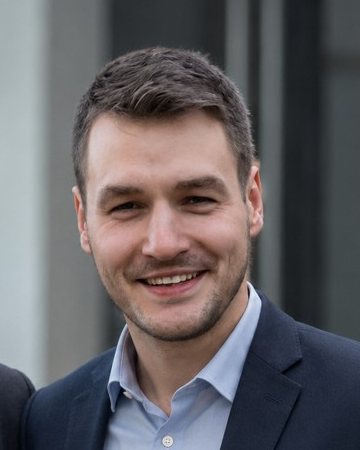
Paul G. Singerman

Principal

Paul G. Singerman, Ph.D.

Led the largest AI/ML research program at Penn State's Applied Research Laboratory and served as its on-site trusted agent to an Intelligence Community agency.

Ph.D. and M.S. electrical engineering and M.A. mathematics, Penn State · B.S. physics, Indiana University of Pennsylvania · TS/SCI with counterintelligence polygraph

Full bio

At Penn State's Applied Research Laboratory, a Navy University Affiliated Research Center, Paul led the laboratory's largest AI/ML research program as an Associate Research Professor: a team of more than thirty engineers, funded at over ten million dollars a year, with an indefinite-delivery, indefinite-quantity (IDIQ) contract whose ceiling is in the hundreds of millions of dollars. From 2023 he was also the laboratory's on-site trusted agent to an Intelligence Community agency: he contributed to its five-year foundation-model roadmap, served as technical evaluator on five competitive acquisitions and on BAA panels, and coordinated an agency-wide AI/ML training curriculum. His research is in geospatial foundation models and multi-source data fusion.
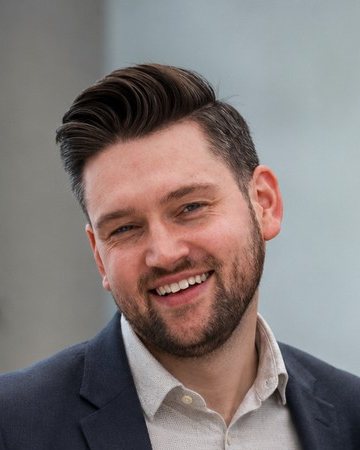
John Luke Och

Principal

John "Luke" Och

Led a SETA team at SAIC supporting early-stage AI/ML initiatives for a national security space program, after five years as a satellite ground systems engineer.

Regents Bachelor of Arts, West Virginia University (mathematics and communications) · SAFe Agilist · TS/SCI with counterintelligence polygraph

Full bio

At SAIC, Luke led a team of ten systems engineering and technical assistance (SETA) engineers supporting early-stage AI/ML initiatives for a national security space program: shaping acquisition strategies, writing technical requirements for more than ten low-maturity AI/ML capabilities, and setting the performance metrics and evaluation criteria behind investment decisions. Before that he spent five years there as a satellite ground systems engineer, defining requirements and managing a portfolio of vendors working toward a modular R&D satellite ground system.

05  Contact

Tell us where you need help

A person reads every message and replies personally. A rough description is enough; details can wait for a call.

Messages are delivered by Web3Forms, a form service, and are used only to reply to you.